
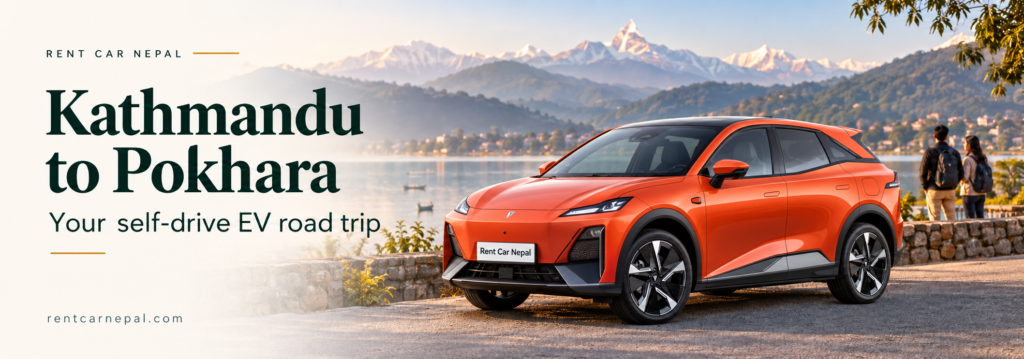
The appeal of driving to Pokhara is simple: you can leave on your own schedule, stop when you need a break and keep a car for exploring after you arrive. With an EV, the trip also includes a little charging preparation before the journey begins.
A Kathmandu to Pokhara self-drive car rental should be planned around the vehicle, the route and the time you have available. This guide explains what to check, how to build your budget and how to avoid turning a pleasant road trip into a race against your return deadline.
Is a self-drive EV suitable for the trip?
It can be, provided the selected vehicle is approved for the route and you have a workable charging plan. The important question is not whether the brochure range looks longer than a map’s distance. It is whether you can complete each stage comfortably with reserve charge and alternatives if plans change.
Passenger load, luggage, hills, weather, driving speed and diversions all affect energy use. Treat the car’s displayed remaining range as an estimate that changes during the drive. Do not plan to reach a charger with almost no battery left.
If this is your first EV rental, read our electric car rental guide before choosing a model.
Agree the route before booking
Tell Rent Car Nepal where you plan to stay in Pokhara and whether you want side trips. A booking for city roads is different from a plan that includes remote viewpoints, rough access roads or a continuation toward Mustang.
Discuss the main highway route via the Mugling corridor, then check its condition close to departure. Do not accept a navigation app’s suggested shortcut without considering road suitability and the rental agreement.
The Department of Roads publishes road information, and the Department of Hydrology and Meteorology provides weather information. Use current notices for your travel dates rather than relying on an old blog’s promise of clear roads.
Allow enough time for the journey
Roadworks, queues, weather, stops and charging can all change the arrival time. Plan the travel day with room to spare. A fixed arrival promise based only on map time can put pressure on the driver when conditions are slower than expected.
Avoid scheduling an important activity immediately after your expected arrival. It is more comfortable to check in, eat and rest before exploring. On the return day, leave a buffer before vehicle handover, especially if you also have a flight.
A two-day round trip gives you limited time in Pokhara. If your schedule allows, adding another night can make the travel more relaxed without requiring a long list of extra activities.
Build a charging plan with a backup
Before departure
Confirm the exact connector used by the rental vehicle. Check compatible charging locations along your agreed route and near your accommodation. Save the location, contact number, opening hours and payment method for each planned stop.
Call or check the operator’s current information before travelling. A map marker alone does not confirm that a charger is accessible, working or suitable for your car. Also identify an alternative you can reach with your planned battery reserve.
During the drive
Check battery level at sensible intervals and compare it with the next charging opportunity. If consumption is higher than expected, charge earlier or adjust the plan while you still have options.
Combine a charging stop with a meal or rest when practical. Charging speed varies with the vehicle, charger output, battery temperature and state of charge. A headline fast-charging time is not a guaranteed stop length for every journey.
At your accommodation
Ask specifically whether the property has a compatible charger, not just parking or an electrical socket. Confirm guest access, charging costs and whether you need to reserve it. Keep a public charging alternative even when the hotel says charging is available.
How much should you budget?
Your rental quote should cover the exact car, dates and outside-valley destination. The website’s base daily rate is a starting reference; the final price can vary with the location and booking conditions.
For illustration, a confirmed rate of NPR 7,000 per day for three days would make the rental component NPR 21,000. This is arithmetic, not a quoted Pokhara package. Add charging, accommodation, food, parking and activities separately.
Keep the deposit separate from spending money. It is security subject to the agreed return and inspection process, not a substitute for paying the rental charge. Our rental price guide explains the difference.
Choose the car around people and luggage
Two travellers with small bags have different needs from a family with several suitcases. Check the actual boot space before committing. Seat count alone does not tell you whether everyone and everything will fit comfortably.
Compare a hatchback and an SUV if you are unsure. A larger vehicle may offer advantages for your group, but its appearance does not make every road suitable. Clearance, tyres, weather and the permitted route still matter.
Use our electric rental car comparison to prepare a shortlist, then ask us about the specific vehicle available for your dates.
A relaxed three-day outline
Day one: travel and settle in
Collect the vehicle with time for inspection and an EV handover. Travel on the agreed route, take breaks and use your planned charging stop if needed. After arrival, check the charge available for the following day rather than postponing the question until morning.
Day two: keep sightseeing manageable
Choose a small number of activities that fit your interests. Park in permitted areas and leave time to enjoy places on foot. Confirm the access road before driving to any hilltop or outlying property.
Day three: return with a buffer
Review current road information, charge as needed and leave enough time for stops. Contact the rental team promptly if disruption affects your return. An extension requires agreement; it is not automatically covered by the original booking.
What to check at vehicle handover
Record existing marks, tyre condition, battery level and the supplied charging equipment. Learn how to release the charging connector, open the port and read charging information on the screen. Ask about the required return charge and what to do if a charging session fails.
Save your agreement and support contact offline. Share the itinerary with your travel companions so the charging and rest plan does not depend on one person’s phone.
Frequently asked questions
Can I drive to Pokhara without charging on the way?
Do not assume that in advance. It depends on the car, starting charge, conditions and actual energy use. Plan compatible stops and retain a comfortable reserve.
Can I return the car in Pokhara?
One-way return must be separately confirmed. A Kathmandu pickup does not automatically include a Pokhara drop-off arrangement.
Is a hatchback enough for this trip?
It may be suitable for an approved route and a smaller group. Confirm road conditions, luggage fit and the particular vehicle before booking.
Are charging stations guaranteed to be available?
No. Check current operating information and keep a backup. This guide does not provide a live charger-status service.
Plan your Pokhara rental
Send Rent Car Nepal your dates and itinerary, including passengers, luggage and side trips. We can check suitable vehicles and the outside-valley quote so you can start the journey with a practical plan.